
Adjusted Balance Sheet
1. Where can I access the Adjusted Balance Sheet?
Go to:
Financial Reports >> Final Accounts >> Balance Sheet >> Select the Balance Sheet Type as Adjusted Balance Sheet >> View
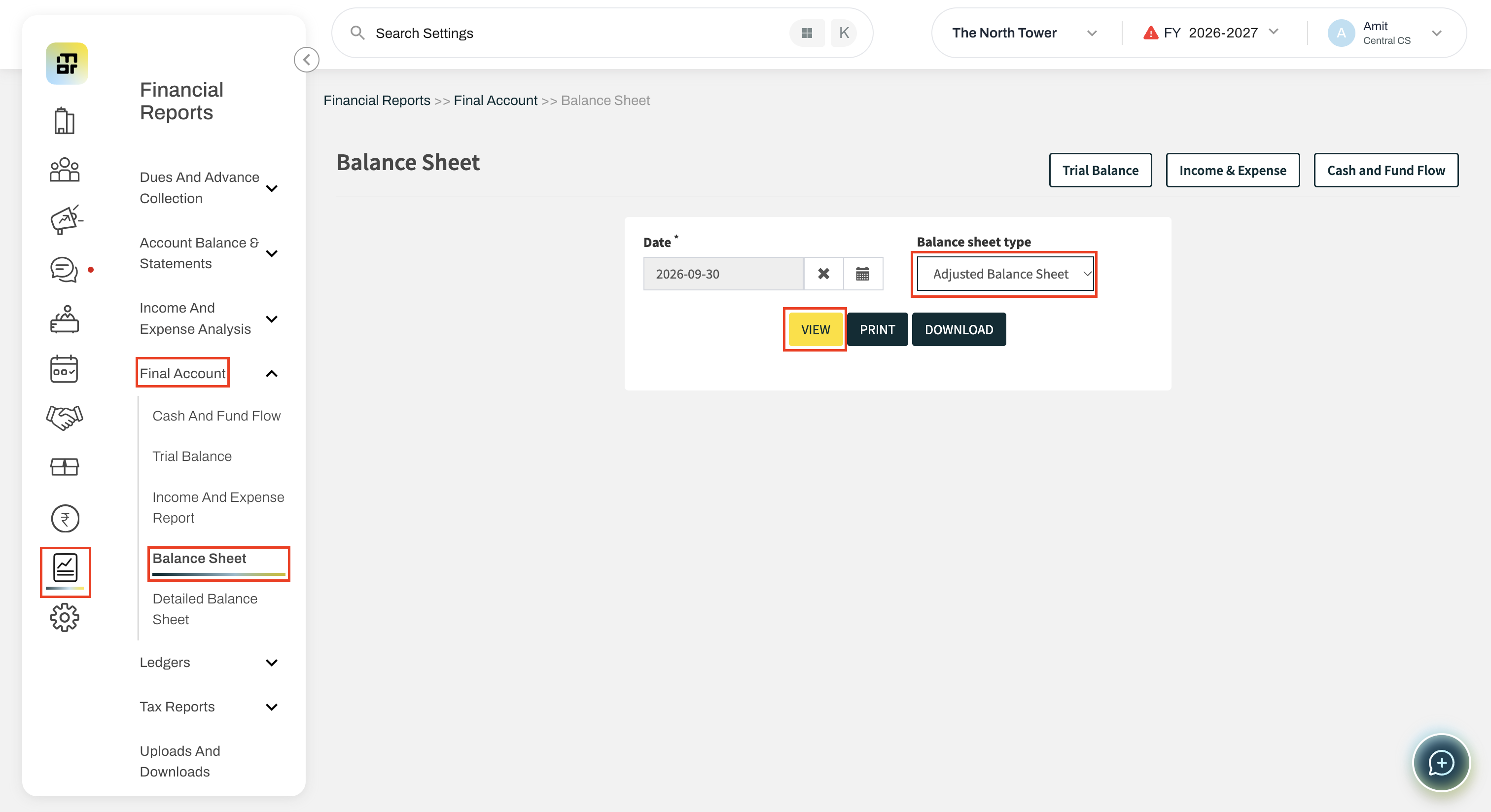
2. What is Adjusted Balance Sheet?
Adjusted Balance Sheet is a new report option that shows the net balance of member, non-member, and vendor advances as deductions against their corresponding dues or payable balances, instead of displaying them as separate standalone entries.
This change is only for better presentation of the report and does not change the underlying accounting entries.
3. Where are Member Advances shown now?
Member Advances are now shown as a negative deduction row directly below “Dues Receivable from Members” under Assets.
This makes it easier to understand the net receivable amount after considering the advance.
4. Where are Non-Member Advances shown?
Non-Member Advances are shown as a negative deduction row directly below “Dues Receivable from Non-Members.”
This allows the user to see the dues and related advance together.
5. Where are Vendor Advances shown?
Vendor Advances are now shown as a negative sub-row directly under the corresponding vendor within Sundry Creditors.
The row will be displayed as:
<Vendor Name> — Advance (Shown as deduction)
This makes it easier to understand the net payable amount to the vendor after considering the advance.
6. How can I identify the advance deduction rows?
All moved or relocated advance rows are highlighted in red and have the tag:
"Shown as deduction"
This helps users easily identify the rows that are being shown as deductions.
7. Why are advances shown as negative amounts?
Advances are shown as negative deductions because they are being adjusted against the corresponding dues or payable balance for presentation in the Balance Sheet.
For example:
Dues Receivable from Members — ₹10,000
Shown as deduction: Member Advance — ₹3,000
Net Balance — ₹7,000
8. Has the accounting balance changed because of this change?
No. This is only a display and netting change in the Balance Sheet.
The underlying accounting entries and ledger balances remain unchanged.